
Continuous Education Programme report
Grant Agreement No. 101111686
Responsible partner: ARCES Association (Italy)
The Continuous Education Programme (CEP) report presents the results of a vocational training initiative carried out between April 2025 and July 2026 under the EU co-funded CiD (Circular Design for Bio-Based Innovation) project. Coordinated by ARCES Association (Italy) alongside 11 European partners, the program trained 134 C-VET learners across six intensive European workshops (Barcelona, Tallinn, Palermo, Vilnius, Genoa, and Hannover). The primary goal was to bridge the gap between digital modeling, bio-based material innovation, and circular urban transformation, equipping architects, designers, and artisans with four key competency pillars: Green Skills, Digital Skills, Resilience Skills and Entrepreneurial Skills.
All courses were aligned with EQF Level 4, structured around EQAVET quality standards, supported by Memoranda of Understanding (MoUs) for cross-border recognition, and delivered using Challenge-Based Learning (CBL) and “learning-by-doing” methodologies.
A central showcase of the CEP framework was the workshop “From Circular Thinking to Construction: Prototyping with Bio-Based Materials,” organized by ARCES in Palermo (28 February – 4 March 2026).
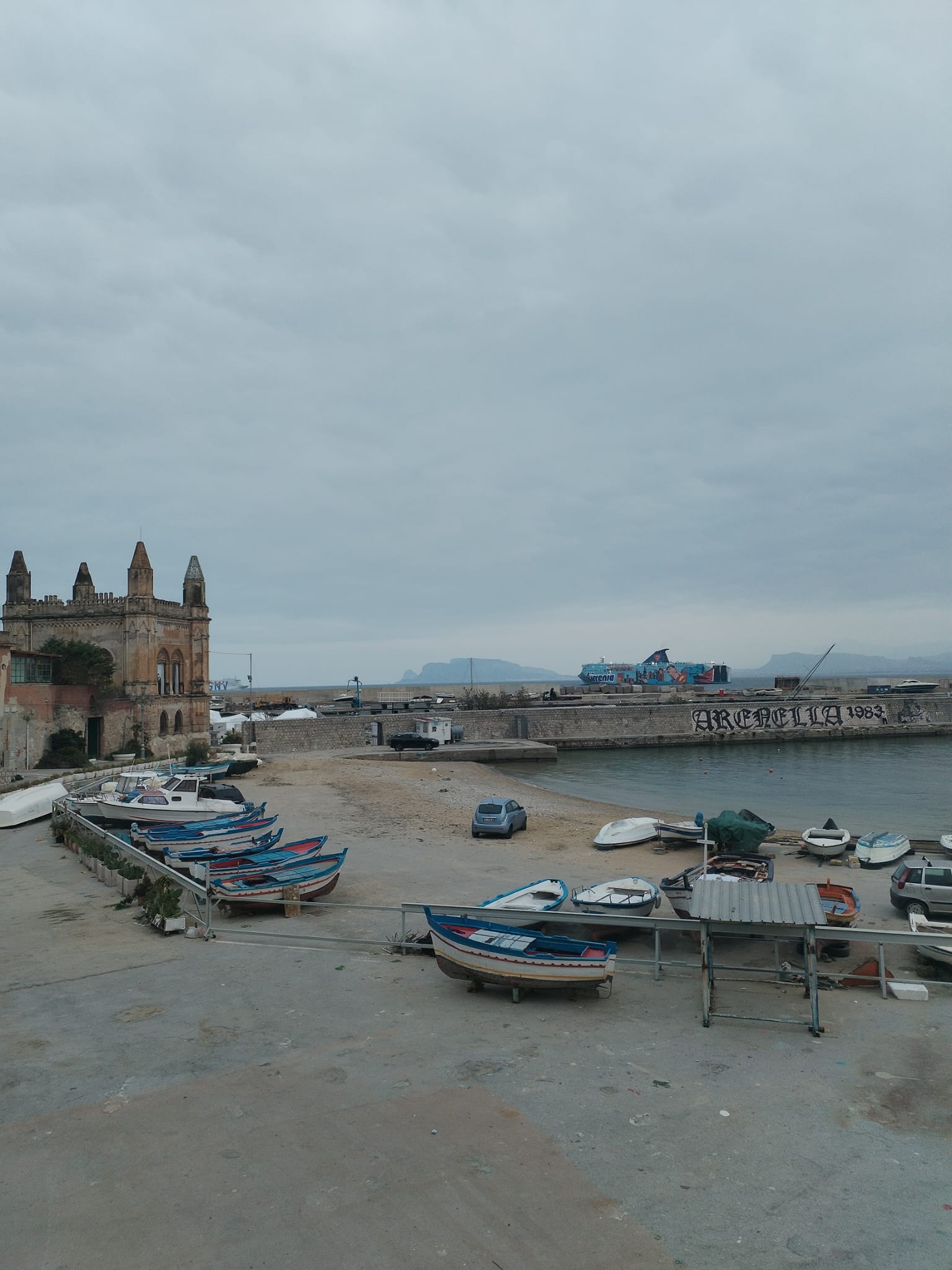
The initiative targeted the Arenella district, a coastal neighborhood in Palermo facing urban degradation and recent storm damage. The pedagogical design directly linked academic experimentation with tangible community needs by collaborating with the local neighborhood hub (Laboratorio di Quartiere Arenella) and visiting historic production sites such as the Antiche Fornaci della Calce Maiorana and Scalo 5B.
Participants experimented with hemp–lime mixtures (supplied by BIOmat), evaluating varying proportions, compaction methods, and natural curing/drying times to combine ancient vernacular wisdom with low-carbon innovation. The workshop produced modular bio-based blocks manufactured using custom wooden formworks and pressure molding techniques. These blocks were specifically co-designed to serve as elements for sustainable urban furniture (benches) intended to revitalize damaged public spaces in Arenella and donated directly to the local community.
The Arenella project highlighted how circular design can foster both environmental sustainability and social cohesion. It proved the viability of using locally available, bio-sourced materials with minimal embodied carbon. By involving local citizens and addressing storm-damaged public spaces, participants developed an acute sense of social responsibility and territorial impact. The workshop established a replicable model for circular urban intervention, combining theoretical input, hands-on prototyping, personalized career mentoring, and neighborhood revitalisation.
The CiD CEP report demonstrates that combining bio-based material experimentation, hands-on prototyping, and site-specific community challenges provides an effective pedagogical blueprint for accelerating climate-neutral urban transitions across Europe.
Link to the Report