
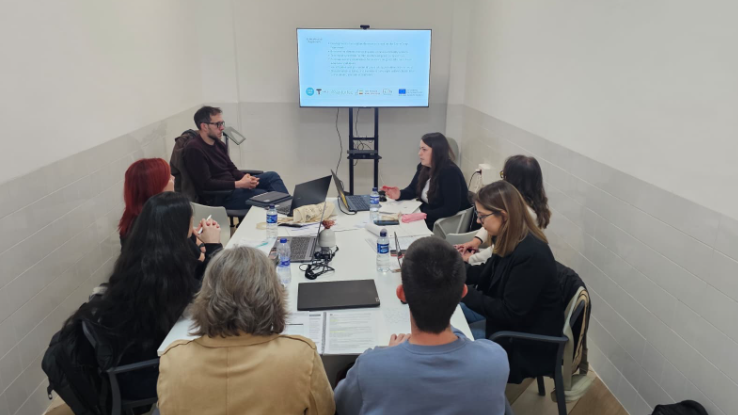
The partners of the Erasmus+ WOVEN Project gathered on March 26, 2026, in La Vall D’Uixó (Spain) for the first Transnational Partner Meeting (TPM1), marking a key milestone in the project’s launch and coordination phase. José Segarra and Isis Torales from CRESOL (Spain), Marta Cuccia and Melinda Terranova from ARCES (Italy), Ana Nunes from MENTORTEC (Portugal), Clara Sousa and Beatriz Martins from EPATV (Portugal), and Sergio Gil and Susana Ferrando from IES Jérica (Spain) participated in a full‑day working session dedicated to planning, alignment, and co‑creation.
The meeting opened with a welcome session and an interactive ice‑breaker led by CRESOL, followed by a comprehensive presentation of the project’s objectives, expected results, and implementation timeline. The consortium reviewed the management structure and the Budget Monitoring Tool (BMT), ensuring shared understanding of financial responsibilities and Erasmus+ compliance.
During the WP1 updates, ARCES presented the Erasmus+ priorities plan, highlighting the project’s alignment with sustainability, inclusion, and digital transformation. MENTORTEC introduced the Quality & Monitoring Plan, outlining the five official indicator groups and the tools that will support continuous evaluation. EPATV presented the communication and dissemination strategy, including logo proposals and visual identity guidelines.
The afternoon focused on WP2, where partners co‑created the first project activities. MENTORTEC shared the draft structure of the “GreenComp in Practice” handbook, while CRESOL presented the concept for the “Visualizing GreenComp” video and animated materials. Preparations for the upcoming training for VET teachers, scheduled for May 2026 in Jérica, were also discussed in detail.
The meeting concluded with a clear roadmap for the next steps, including the refinement of WP2 materials, scheduling of upcoming virtual meeting and multiplier events, and the launch of WP3 and WP4 activities in the coming months.
The WOVEN Project continues to advance its mission of strengthening green skills, employability, and resilience in vulnerable rural environments through innovative VET approaches and cross‑border collaboration.